
Buying Guides
Sourcing Electronic Components from China: What Matters Beyond the Price
A real BOM sourcing experience in China, covering supplier research, genuine components, pricing, and delivery challenges.
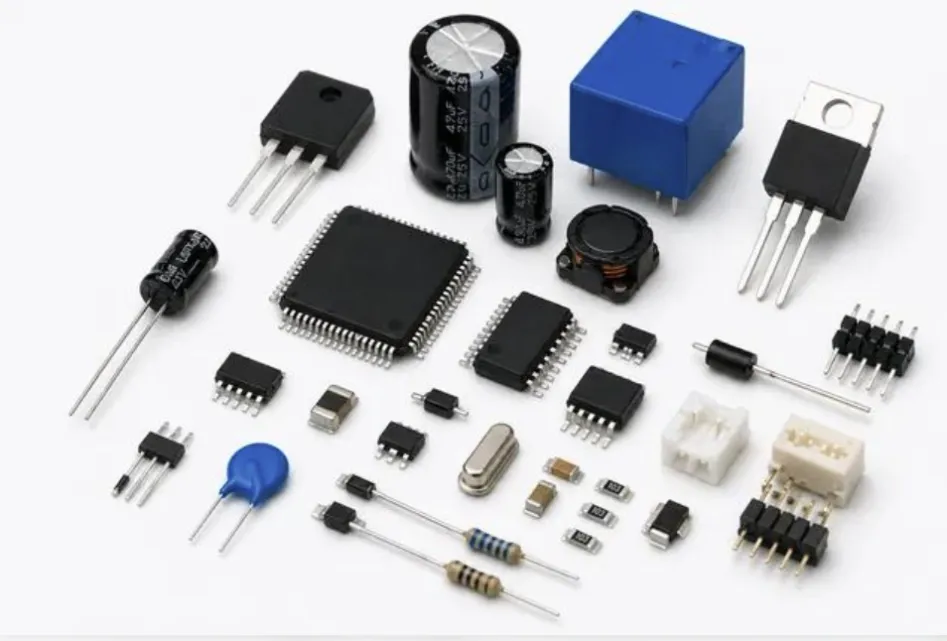
I recently received a BOM (Bill of Materials) from an overseas customer who was looking for electronic components in China.
At first, it seemed like a straightforward sourcing request: check the part numbers, contact suppliers, collect quotations, and compare prices.
But after a few emails, I realized that the customer's biggest concern wasn't price.
They wanted to know whether the suppliers were reliable and whether the components were genuinely new and original.
That changed how I approached the project.
What the Customer Actually Needed
The customer had several clear requirements.
Every component had to match the exact manufacturer and manufacturer part number (MPN) listed in the BOM. Alternative or substitute parts were not acceptable.
They also required new, original components. No refurbished, remarked, or reconditioned parts.
For each item, they wanted to know the available quantity, unit price, delivery lead time, date code, lot code, and whether any certificates or traceability documents could be provided.
The customer was also working against a tight deadline. Their own customer needed a quotation quickly, so waiting several days for every item in the BOM wasn't practical.
One point they made was particularly clear: they weren't simply looking for the lowest price. They wanted someone in China who could help them identify suppliers they could trust.
Starting with Authorized Distributors
I previously worked as a project manager in the EMS industry, so my first thought was to check the more established supply channels.
I contacted former colleagues and purchasing contacts, including people working in EMS factories, to see whether the required components were available.
I also approached authorized distributors.
The difficulty was that some distributors had minimum order quantities that didn't suit this particular requirement. Other parts were difficult to locate through regular distribution channels.
This is a situation I've seen before in electronics sourcing. A component may still appear in catalogs, but that doesn't necessarily mean a supplier has stock available for immediate delivery.
I also explored whether excess and obsolete (E&O) inventory from EMS manufacturers might be an option.
Such inventory can sometimes provide another sourcing channel, but the original purchasing records, storage conditions, component condition, and traceability still need to be checked.
Comparing Independent Component Suppliers
Since the authorized distribution channels couldn't cover everything, I contacted several independent electronic component distributors and BOM sourcing companies.
I collected their quotations and organized them into a comparison sheet.
Initially, I focused on comparing prices and identifying which suppliers could potentially cover more items.
However, the customer pointed out something important: a quotation without confirmed stock availability or lead time wasn't particularly useful.
They preferred a smaller number of complete offers over a long list of prices that couldn't yet be supported by delivery commitments.
That was a useful reminder.
A low price doesn't help much if the supplier can't confirm when the parts will actually be available.
Visiting a Supplier in Shenzhen
During the sourcing process, I found one supplier who was particularly responsive.
The salesperson took time to review the BOM, ask questions about several components, and discuss possible sourcing channels.
Rather than relying entirely on email communication, I arranged a visit to the company's office in Shenzhen.
We sat down together and reviewed the component list.
The supplier explained which parts were difficult to find, which sourcing channels might be available, and what additional information would be needed before confirming the quotations.
The company also shared information about its previous export business and component testing arrangements.
The visit helped me better understand how the supplier worked and how seriously they approached the requirements.
Of course, meeting a supplier in person doesn't automatically prove that every component they offer is genuine. Product origin, documentation, and inspection still need to be verified.
But it gave me a better basis for deciding whether the supplier was worth considering.
Exact Part Numbers Matter
One issue came up when suppliers tried to identify certain components using product photographs.
The customer rejected that approach.
They made it clear that matching a component by appearance was not acceptable. The part had to match the exact manufacturer and MPN in the BOM.
I agreed with that requirement.
Two electronic components can look almost identical but have different specifications.
For example, while reviewing one industrial networking component, I found that the requested industrial-temperature version was less commonly available than a commercial-temperature version.
The difference mattered because the specified operating temperature ranges were not the same.
The commercial version might be easier to purchase, but that didn't make it an acceptable replacement.
For this project, the original MPN remained the requirement.
Component Authenticity and Traceability
Another important part of the discussion was how to reduce the risk of counterfeit components.
In the EMS industry, manufacturers generally prefer purchasing through original manufacturers and authorized distributors. They also use supplier qualification, incoming inspection, and traceability procedures to manage purchasing risks.
Independent distributors can be useful when components are difficult to find, but I believe they require additional attention.
For this project, I focused on asking suppliers about the origin of the components, available stock, date codes, lot codes, and supporting documents.
For higher-value or higher-risk parts, I also suggested independent third-party inspection and testing.
These steps don't guarantee that every risk can be eliminated. They do, however, provide more information than a quotation alone.
Why I Didn't Wait for the Entire BOM
The customer needed to respond to their own customer quickly.
Some suppliers could provide prices for certain items but needed more time to confirm others.
Instead of holding back everything until the complete BOM was finished, we agreed to prioritize the items with more complete information.
I sent updated quotations while continuing to follow up on the remaining components.
This approach allowed the customer to begin evaluating the available offers without waiting for every outstanding item.
It also made the next steps clearer: focus first on the suppliers who could provide both competitive pricing and credible delivery information.
Where the Project Stands
After the supplier discussions and my visit to Shenzhen, I shared updated quotations and supporting information with the customer.
Some items were still being sourced, and the customer was waiting for feedback from their own customer.
The project had not yet reached the purchase or delivery stage.
Even so, the experience reinforced something I already believed from working in electronics manufacturing.
Finding a supplier who can quote a part number is relatively easy. Finding a supplier who can provide the correct component, explain its origin, confirm availability, and stand behind the delivery commitment takes more work.
And for many buyers, that work matters more than saving a little on the unit price.
Looking for Electronic Components in China?
If you have a BOM or specific electronic components to source from China, feel free to contact me.
I can help check available sourcing channels, compare supplier quotations, and coordinate further verification where needed.
You can send me the manufacturer part numbers, required quantities, and delivery requirements.