Buying Guides
Sourcing Medical-Grade Glass Dropper Bottles from China: What I Learned
Sourcing medical-grade glass dropper bottles from China? Learn about Type I glass, caps, sterilization, testing, custom packaging and supplier verification.
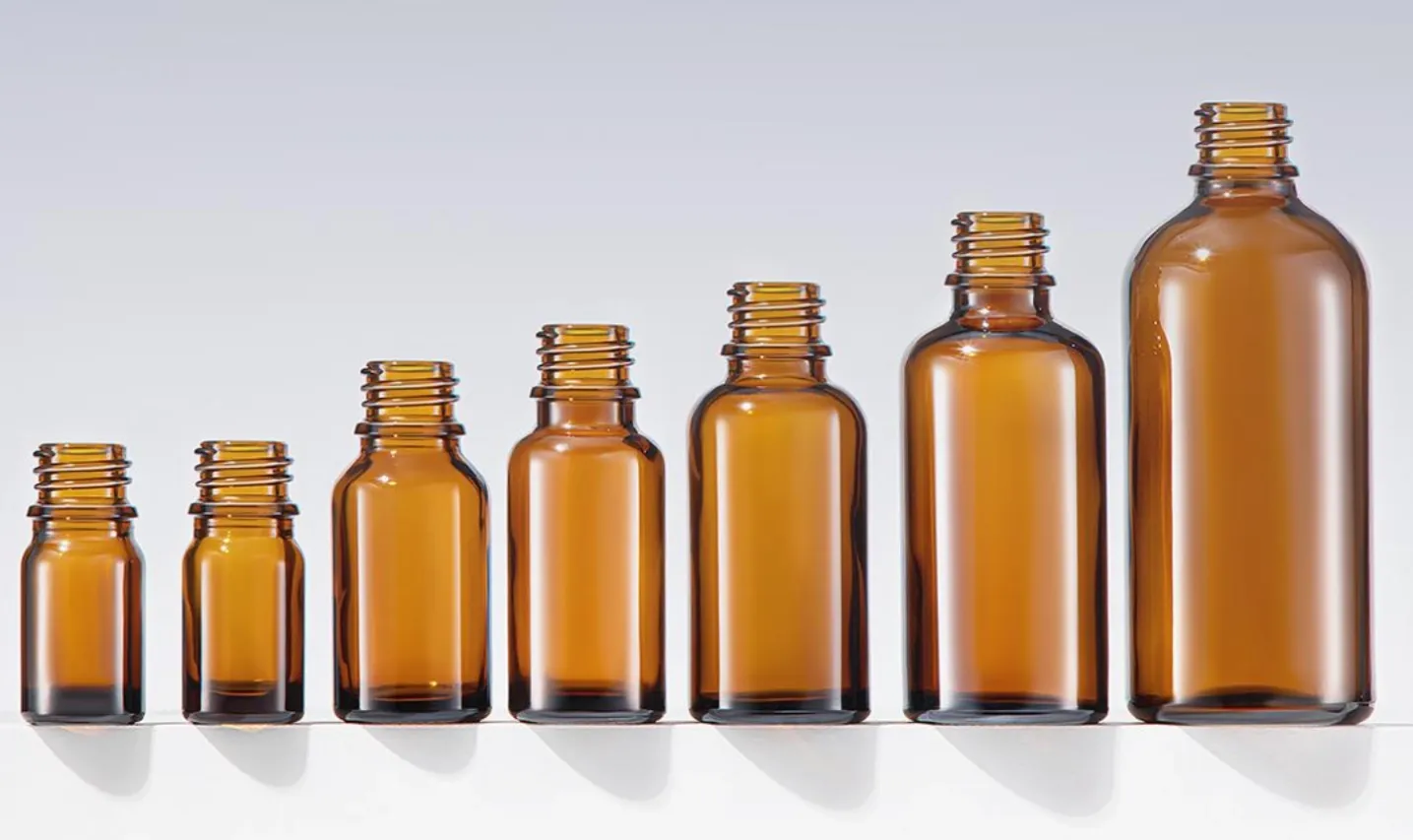
I've recently been sourcing 10ml amber glass dropper bottles for a project with some fairly strict requirements.
At first, I thought finding the bottles would be relatively easy. There are plenty of glass bottle manufacturers in China, and 10ml amber dropper bottles are a common packaging product.
But the requirements went well beyond finding a bottle with the right shape and color.
The bottles needed suitable glass materials, compatible droppers and caps, traceable production batches, supporting test reports, and potentially sterile packaging. There was also a small disposable funnel that needed to fit the bottle opening.
I contacted several suppliers. Some had the right bottles but couldn't answer the technical questions. Others had experience with medical products but didn't have the right molds or packaging options.
It took more work than I initially expected.
Here are some things I learned while looking for a suitable supplier.
Finding a Bottle Is Easy. Finding the Right Manufacturer Isn't.
When searching for glass dropper bottle suppliers in China, you'll find manufacturers serving cosmetics, essential oils, skincare, pharmaceuticals and medical-related packaging.
Many of their products look almost identical in photos.
But once I started asking about glass composition, testing, cleaning and sterilization, the differences between suppliers became much clearer.
Some factories focus mainly on cosmetic packaging. They are experienced in colors, printing, coatings and attractive retail packaging.
Others work with pharmaceutical or medical-related packaging and may have more experience with batch traceability, quality documentation and controlled manufacturing processes.
The difficult part was finding a supplier that could handle both the packaging design and the technical requirements.
One supplier I spoke with had a good understanding of bottle manufacturing, glass materials, cap structures and protective packaging. They also explained what they could do themselves and what would require third-party testing.
I appreciated that. I'd rather have a supplier explain their limitations than simply say yes to everything.
Type I Borosilicate or Type III Soda-Lime Glass?
This was one of the first technical questions.
The preferred material was Type I borosilicate glass, with Type III soda-lime glass considered as an alternative.
These are not just two different names for the same material.
Type I borosilicate glass generally offers higher hydrolytic resistance and is commonly used where stronger chemical resistance is required.
Type III soda-lime glass is also widely used in packaging, but whether it's suitable depends on the formulation and intended use.
The supplier I spoke with could manufacture soda-lime glass bottles and offered customized borosilicate bottles.
There was another detail: the glass pipette was made from low-borosilicate glass.
That reminded me to check the bottle and pipette separately.
A supplier may offer a borosilicate bottle, but that doesn't automatically mean every glass component in the dropper assembly uses the same material.
And the glass type should be supported by suitable material specifications or test evidence, not just a product name in a catalog.
Amber Color, UV Protection and Appearance
Amber glass is often selected to help protect light-sensitive formulations.
But I learned that the appearance requirements also need to be discussed carefully.
The supplier explained that small bubbles and surface scratches can occur during glass bottle production. Scratches may be more noticeable on amber bottles.
If the buyer expects a very clean cosmetic finish, the factory may need to arrange additional inspection and sorting.
I would want to agree on acceptable appearance standards before production, preferably using approved samples and clear inspection criteria.
For example, are small surface marks acceptable? What about bubbles? How will cracks, chipped edges or rough threads be rejected?
Simply writing "no defects" on a purchase order isn't always enough to avoid disagreements later.
Transportation Packaging Makes a Difference
Even if the bottles leave the factory in good condition, glass can be scratched or damaged during transportation.
The supplier offered two packaging options.
Individual bags with foam inserts
Each bottle is packed in a protective bag and placed into a custom foam insert before being packed into a carton.
This offers more separation and cushioning, but adds packaging cost.
Individual bags with cardboard dividers
The bottles are individually bagged and separated with cardboard partitions. Cartons can also be palletized and stretch-wrapped.
This may be a more economical solution, depending on the bottle design and shipping conditions.
I would compare both options using actual packed samples and, for larger orders, appropriate transport testing.
One more thing: protective packaging and sterile packaging are not the same.
Foam inserts and ordinary plastic bags may protect glass from scratches, but they don't automatically maintain sterility.
Check the Neck Finish Before Choosing the Dropper
For a 10ml glass dropper bottle, the neck finish is a small detail that can cause a lot of trouble.
Common specifications include DIN18 and 18/410, but I wouldn't assume that two components will fit simply because both are described as 18mm.
The exact thread geometry, sealing surface and closure design matter.
In this project, the supplier had not yet confirmed the exact neck specification.
My next step was to request samples and check the dimensions.
I also wanted to test the actual bottle, cap, pipette and rubber bulb as a complete assembly.
This is much safer than ordering bottles from one factory and caps from another based only on catalog dimensions.
Silicone or NBR Rubber Bulbs?
The rubber bulb looks like a minor component, but its material matters because it may come into contact with the formulation.
The supplier offered two options.
Silicone was generally recommended by the supplier for serum-based products.
NBR (nitrile rubber) was generally recommended for oil-based formulations and was more expensive.
These are useful starting points, but they are not universal compatibility rules.
Different formulations may contain oils, solvents, preservatives or active ingredients that behave differently with elastomers.
The supplier recommended testing the actual formulation with the selected bulb material before making a final decision.
I agree with that approach.
A material that works for one serum may not be suitable for another.
I would also check whether the bulb needs to meet specific food-contact, medical or other material requirements in the destination market.
Tamper-Evident and Child-Resistant Caps Are Different Things
Another detail was the cap.
The requirements included a tamper-evident feature and a possible child-resistant option.
These are different functions.
A tamper-evident design provides visible evidence that the package may have been opened or disturbed.
A child-resistant closure is designed and tested to make opening more difficult for young children while remaining usable by adults.
A cap doesn't become child-resistant just because it has an unusual shape or a locking feature.
The supplier showed several cap structures, including options with different collar designs and materials.
Some were aluminum; others used injection-molded plastic components.
The appearance also mattered. For example, a smooth gold collar was available as an alternative to a more decorative design.
For this kind of project, I would request assembled samples and confirm which exact closure configuration is being offered.
If certified child resistance is required, I would ask for testing evidence covering the relevant bottle-and-closure combination.
What Can the Factory Actually Customize?
The supplier had quite a few customization capabilities.
These included custom bottle molds, plastic component manufacturing, surface coating, printing, hot stamping, screen printing, electroplating and frosting.
But these processes serve different purposes.
Process | Typical Purpose |
|---|---|
Custom glass mold development | New bottle shape or dimensions |
Injection molding | Plastic caps, collars and accessories |
Surface coating | Decorative finish or color effects |
Screen printing | Logos and product information |
Hot stamping | Metallic decorative details |
Electroplating | Metallic finish on suitable components |
Frosting | Matte or frosted surface appearance |
Graduation marking | Measurement marks on glass pipettes |
The important thing is to understand which processes are performed in-house, which are outsourced, and whether they are suitable for the intended application.
For packaging with strict material requirements, decorative coatings and printing inks may need additional evaluation.
A factory being able to make something look good doesn't automatically mean it meets every material or regulatory requirement.
Can the Supplier Provide Lead, Cadmium and California Prop 65 Testing?
For products going to the United States, documentation was another major part of the discussion.
The requested information included lead and cadmium testing, California Proposition 65 considerations, and applicable FDA 21 CFR requirements for the bulb and cap materials.
The supplier said the products could be sent to a third-party laboratory for testing.
That's useful, but I wouldn't treat it as confirmation that the product has already passed.
Before ordering, I would clarify exactly which components are being tested, which standards or methods will be used, and whether the reports apply to the finished configuration.
California Proposition 65 is also more complicated than a simple material certificate. Whether a warning is required depends on relevant chemical exposures and applicable requirements.
Similarly, FDA food-contact compliance depends on the specific material, its composition and intended conditions of use. A general statement that a material is "FDA approved" isn't enough.
For a product intended for medical or pharmaceutical use, additional requirements may apply.
This is why I try to understand the actual use of the packaging before deciding which reports to request.
Cleaning and Sterilization Were the Hardest Questions
This was probably the most complicated part of the sourcing process.
The requirement wasn't simply to deliver empty bottles.
There was interest in bottles that had been cleaned, prepared for filling or potentially sterilized.
The supplier explained two possible approaches.
Purified Water Washing and Heat Treatment
The first option was to wash the bottles using purified water, followed by high-temperature drying or heat treatment.
This is similar to preparation processes used by some cosmetic packaging suppliers before filling.
However, washing and heat treatment do not automatically establish a validated sterile product.
The supplier was clear that if the bottles were then packed in ordinary plastic bags, foam inserts or cardboard cartons, they couldn't guarantee that the bottles would remain sterile.
I think that distinction is important.
A clean bottle, a bottle that has undergone a sterilization process, and a bottle supplied in a validated sterile barrier system are not necessarily the same thing.
Gamma Sterilization
The second possibility was gamma irradiation.
Depending on the materials and packaging system, gamma sterilization may be performed after the product has been sealed in suitable packaging.
But the process needs to be validated for the specific product and packaging configuration.
The supplier also raised a concern about material compatibility.
Gamma irradiation may affect certain plastics, rubber components, coatings or other materials, potentially causing discoloration or aging.
These effects need to be evaluated rather than assumed.
For a complete glass dropper assembly, I would want to understand whether the bottle, pipette, bulb and cap can all tolerate the selected process.
I would also ask who performs the sterilization and what validation and batch-release documentation can be provided.
Does Sterilization Need to Happen in China?
This led to another question.
Would it make more sense to arrange the final cleaning or sterilization process closer to the filling operation?
In some projects, that could provide more flexibility when selecting bottle suppliers.
But the decision depends on how the packaging will be used, where filling takes place, and whether a validated cleaning or sterilization process is required.
A properly validated sterile barrier system can maintain sterility during transportation within its established conditions. Sea shipping itself does not automatically make a correctly packaged sterile product non-sterile.
The key is understanding the whole process, not just asking a supplier whether they can "sterilize the bottles."
The Mini Funnel Was Surprisingly Difficult to Source
The project also required a small disposable funnel to transfer liquid into the 10ml bottles.
It sounds like a simple plastic accessory.
But the requirements included medical- or food-grade PP or LDPE, BPA-free material, applicable FDA 21 CFR 177 documentation, individual packaging, and potentially sterile versions.
The funnel spout also had to fit the bottle neck.
I contacted manufacturers with existing funnel molds, but many didn't have the required documentation or sterilization capabilities.
Some medical-related manufacturers had more suitable quality systems or access to sterilization services, but they didn't have an existing mold for such a small funnel.
That creates a difficult situation for a relatively low-cost product.
Developing a new mold may not make financial sense if the order quantity is small.
So I started looking at the funnel and bottle together rather than as two unrelated products.
I would want the supplier to provide matched samples and test whether the funnel actually fits the bottle opening.
It's also worth confirming whether the funnel will be used only once, whether it contacts the formulation, and whether sterile packaging is genuinely necessary.
Sometimes those answers can change the supplier search completely.
Batch Traceability and COA
The supplier said it could provide batch traceability and a Certificate of Analysis (COA) with shipments.
That's a good starting point.
But I would still ask what the COA actually covers.
For example, does it include dimensions, appearance, material checks or other agreed specifications?
Can the batch number on the packaging be traced back to production records?
If third-party testing is arranged, how are the test reports connected to the delivered production batch?
The level of documentation should match the intended use and the buyer's requirements.
Samples Before a Bulk Order
With so many components involved, I wouldn't want to approve the product based on pictures alone.
I would request the bottle, pipette, rubber bulb, cap and funnel together.
Then I would check the actual assembly, dimensions, fit, appearance and packaging.
If the bottle will contain a specific formulation, compatibility testing should be considered using that formulation.
I would also confirm the quotation carefully.
The bottle, dropper assembly, custom cap, individual bag, foam insert, additional inspection, third-party testing and sterilization may all be priced separately.
A low bottle price doesn't necessarily mean a low total packaging cost.
What I Took Away From This Supplier Search
This project reminded me that a simple-looking product can become quite complicated once the requirements are specific.
There are plenty of manufacturers in China that can supply a 10ml amber glass bottle.
Far fewer can provide the exact combination of materials, compatible components, quality documentation, appearance standards, cleaning processes, packaging and traceability that a particular buyer needs.
And sometimes the supplier isn't the only issue.
The requirements themselves need to be clarified.
Does the product really need to arrive sterile? Is Type I glass essential for the formulation? Does the funnel need to be individually sterilized? Which tests are actually required for the intended market?
Those questions affect which factories are suitable, what the MOQ will be and how much the finished product will cost.
For me, the work isn't finished when I find a supplier that has the right product photo.
I want to know whether they can deliver the actual product the buyer needs, with the right materials, documentation and process.
That's where most of the sourcing work happens.
Looking for Glass Dropper Bottles or Custom Packaging Suppliers in China?
I help overseas buyers find and evaluate Chinese suppliers for glass packaging, plastic components, medical-related packaging, beauty products and other customized products.
This can include supplier research, factory communication, sample coordination, documentation collection, packaging development, production follow-up and quality inspection.
If you have detailed specifications, previous supplier problems or technical questions, feel free to share them.
Those details help me narrow down the supplier search.