Buying Guides
Cosmetics Sourcing in China: What Beauty Brands Should Know Before Choosing a Manufacturer
A practical guide to cosmetics sourcing in China, covering manufacturer selection, formulation, packaging, testing, compliance, and production.
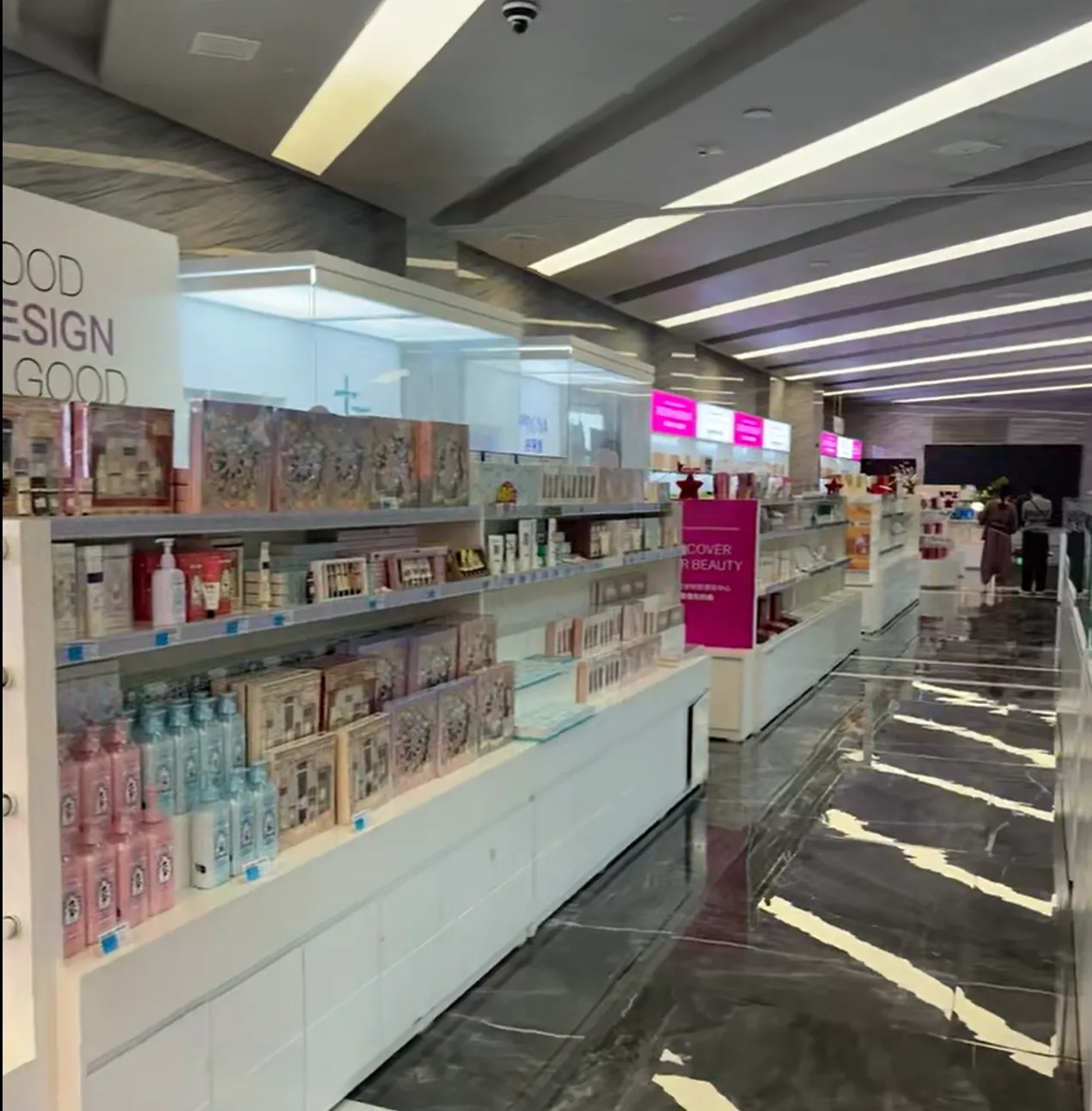
China has a mature and well-developed beauty supply chain covering skincare, hair care, makeup, personal care, packaging, ingredients, formulation development, product testing, and OEM/ODM manufacturing.
But for a beauty brand, having access to more suppliers does not necessarily make sourcing or product development easier.
The real challenge is usually not simply finding a cosmetics manufacturer. It is finding the right manufacturer for your product, coordinating formulation, packaging, testing, intellectual property, and production, and making sure the approved sample can be reproduced consistently at scale.
These are also some of the questions I often hear when speaking with overseas beauty brands.
Where Is the Cosmetics Industry Located in China?
China has a large beauty manufacturing industry, but different regions have developed different strengths. From a practical sourcing and product-development perspective, there are several areas worth knowing.
Yiwu / Jinhua
Yiwu and the surrounding Jinhua area have a well-established supply chain for makeup, cosmetics manufacturing, and cross-border exports.
One of the advantages of this area is the large number of suppliers, wide product selection, and fast response to market trends. It is also relatively easy to find existing products and mature solutions.
For this reason, the area can be suitable for price-sensitive products, e-commerce businesses, and brands looking to test the market relatively quickly.
Guangzhou
Guangzhou is one of China's most important cosmetics manufacturing centers and one of the main areas I look at when sourcing beauty and personal-care products.
The region has a very complete supply chain covering raw materials, formulation development, laboratories, OEM/ODM manufacturing, packaging, filling, testing, and finished-product production.
There is also a wide range of suppliers, from larger established manufacturers to more flexible OEM/ODM factories. This gives brands more options in terms of product type, manufacturing capability, and production scale.
For products such as shampoos, conditioners, styling products, skincare, and other personal-care products, Guangzhou is often one of the first areas worth exploring.
Huzhou
Huzhou, in Zhejiang Province, has developed a growing beauty manufacturing cluster. Daixi, often referred to as a "Beauty Town," is home to cosmetics manufacturers and related supply-chain companies.
The local industry has placed more emphasis on R&D, advanced manufacturing, product quality, and mid-to-high-end beauty products.
There are manufacturing resources across skincare, facial masks, fragrance, makeup, and other beauty categories.
For projects that place greater importance on product quality, R&D capabilities, and long-term brand development, Huzhou can also be worth considering.
Shanghai
Shanghai has a somewhat different role compared with more manufacturing-focused beauty clusters.
In addition to manufacturing, Shanghai is home to many international beauty brands, R&D organizations, ingredient companies, brand-management teams, and professional service providers.
As a result, Shanghai has strong resources in brand development, product R&D, premium beauty, and international business.
For an overseas beauty brand, there is no need to simply ask which region is "the best."
The more important question is which supplier is the best fit for your specific product, target market, brand positioning, development requirements, and future production plans.
OEM, ODM, or Private Label?
This is one of the first questions I consider when evaluating a beauty project.
With private label cosmetics, a brand will typically select from a manufacturer's existing formulas and focus more on branding and packaging.
With ODM manufacturing, the manufacturer may provide an existing formulation as a starting point and make adjustments to ingredients, fragrance, texture, color, or other product characteristics.
For a more customized OEM or product-development project, the brand may already have its own formula, reference sample, or detailed product specifications and need a suitable manufacturer to reproduce, improve, or further develop the product.
There is no single approach that is always better.
For a new brand entering the market, developing everything from scratch can add unnecessary complexity.
For an established brand with an existing product or formula, however, using a standard private-label product may not provide enough differentiation or control.
The right approach should depend on the product, brand positioning, target market, and long-term plan.
How Do You Select a Cosmetics Manufacturer in China?
Finding cosmetics factories in China is relatively easy.
Determining whether a factory is actually suitable for your project is much harder.
When evaluating potential cosmetics manufacturers, I don't only look at whether they can technically produce a certain type of product.
I also want to understand:
- Which products and formulations they specialize in
- Their actual manufacturing capabilities
- R&D and laboratory capabilities
- Relevant certifications and manufacturing qualifications
- Experience with similar products
- Export experience
- Product testing capabilities
- Packaging capabilities
- Quality-control systems
- Production capacity
- Ability to support future growth
I also believe clients should understand who the potential manufacturers are and why they are being considered.
Supplier selection should not be a completely closed process.
Before choosing a manufacturer, a brand should have enough information to compare the factories' capabilities, qualifications, laboratory and testing resources, and overall suitability for the project.
Can Cosmetics Manufacturers in China Develop Formulas?
Yes.
Many established cosmetics manufacturers in China have their own laboratories and formulation-development teams.
Depending on the manufacturer and the project, they may support:
- Existing formula selection
- Formula modification
- Custom formulation development
- Development based on a reference product
- Texture, fragrance, and ingredient adjustments
- Stability testing
- Microbial testing
- Product performance testing
However, a factory saying, "We have our own R&D laboratory," does not automatically mean it is suitable for every type of beauty product.
For example, if I am looking for a manufacturer for a hair-care project, I would prefer a supplier with meaningful experience producing shampoos, conditioners, styling products, hair oils, and leave-in products rather than choosing a general cosmetics factory simply because it has a laboratory.
A manufacturer's actual experience in the specific product category matters.
Who Owns the Cosmetic Formula?
This is an important question to clarify before formulation work begins.
It becomes particularly important when a brand has already developed a product in another country and is considering transferring manufacturing to China.
There can be several different situations.
The brand may already own the complete formula.
The brand may provide an existing formula to a new manufacturer for reproduction.
The manufacturer may make adjustments to an existing formula.
Or the brand and manufacturer may develop an entirely new formulation together.
These situations should not automatically be treated the same way.
Before product development begins, the brand and manufacturer should clarify:
- Who owns the original formula
- Who owns any newly developed or modified formulation
- Whether the brand will receive the complete formula
- Whether the formula can be transferred to another manufacturer in the future
- Confidentiality obligations
- Whether the manufacturer can use the formulation for other customers
If the brand already owns intellectual property, I also believe it is important to distinguish pre-existing IP from any new development created during the project.
Otherwise, a brand could spend significant time developing and marketing a successful product, only to discover later that it cannot easily move production because it does not control the complete formulation.
How Should NDAs and Confidentiality Be Handled?
Beauty product development can involve sensitive information such as formulations, ingredient percentages, product concepts, packaging designs, launch plans, and supply-chain information.
Confidentiality should therefore be considered early in the project.
Depending on the structure of the project, confidentiality arrangements may involve:
Brand → Sourcing / Project Management Partner → Manufacturer
If a project involves a proprietary formulation, the manufacturer that actually receives and works with the formula should also have clear confidentiality and intellectual-property obligations.
An NDA is important, but an NDA alone does not replace a clear agreement regarding formula ownership and usage rights.
These issues are related, but they are not the same.
What Testing Should Be Considered for Beauty Products?
The testing required will depend on the product itself and the market where it will be sold.
For skincare, hair care, and other water-based personal-care products, the development process may involve:
- Stability testing
- Microbial testing
- Packaging compatibility testing
- Physical and chemical testing
- Product performance or efficacy testing
- Batch quality testing
Testing should not be something considered only after the formula has been finalized.
It is part of the product-development process.
For example, a product may perform well as a laboratory sample but behave differently after being stored at different temperatures or filled into the final packaging.
Packaging Is Part of Product Development
Beauty packaging is not only about appearance.
Bottles, tubes, pumps, caps, liners, and other packaging components need to work with the actual product.
For example, a high-viscosity conditioner may require a very different dispensing system from a lightweight serum.
This is why I prefer to consider:
Formula Development + Packaging Sourcing
together rather than treating them as two completely separate projects.
Before production, it may be necessary to consider:
- Bottle or tube materials
- Whether the pump is suitable for the product
- Product viscosity
- Filling method
- Leakage risks
- Sealing structure
- Formula-packaging compatibility
- Labeling and printing requirements
- Transportation conditions
A package can look excellent but still be the wrong solution if it does not work properly with the formulation.
How Do You Make Sure Mass Production Matches the Approved Sample?
Moving from laboratory samples to commercial production is another important stage.
A good sample is only the beginning.
Before mass production, the formulation, appearance, fragrance, texture, packaging, and other important specifications should be clearly confirmed.
The final approved sample can then serve as an important reference for production and quality control.
For customized products, another question is:
Can the manufacturer maintain consistency when production volumes increase?
The goal of product development is not simply to create one good sample.
The goal is to create a product that can be manufactured consistently and repeatedly over the long term.
When Should Regulatory Compliance Be Considered?
The country or region where the product will ultimately be sold should ideally be identified at the beginning of the project.
A product developed for the U.S. market may have different requirements from one developed for the EU, UK, Middle East, or other markets.
These requirements may affect:
- Ingredients
- Product claims
- Testing
- Documentation
- Labeling
- Manufacturer selection
When evaluating a manufacturer, I therefore look not only at:
"What can this factory manufacture?"
but also:
"Which markets does this factory have experience supplying?"
and:
"What documentation and related support can it provide?"
Compliance should not be considered only after the product has already been developed.
The target market should be part of the product brief from the beginning.
Can Overseas Clients Visit Cosmetics Factories in China?
Yes.
For larger projects or long-term manufacturing relationships, visiting the factory can be very useful.
Compared with reviewing a supplier's website, catalog, or presentation, an on-site visit gives a brand much more direct information.
Depending on the manufacturer, a visit may include:
- R&D laboratories
- Raw-material areas
- Production workshops
- Filling and packaging areas
- Quality-control facilities
- Finished-product warehouses
Clients can also meet directly with the teams responsible for product development and manufacturing.
When needed, I can help coordinate supplier meetings and factory visits in China so clients can better understand the manufacturing process and evaluate potential partners in person.
How I Approach Cosmetics Sourcing in China
I don't see cosmetics sourcing as simply:
Find a factory → Get a quotation → Place an order.
Customized beauty products usually involve several connected stages:
Product Requirements → Manufacturer Selection → Formula Development → Sampling → Testing → Packaging → Sample Approval → Mass Production → Quality Control → Shipping
A change in one stage can easily affect another.
Changing a bottle may affect the filling process.
Changing an ingredient may require additional testing.
Changing the target market may affect the formulation, labeling, or required documentation.
For this reason, I prefer to manage customized beauty sourcing as a complete product-development and supply-chain project, rather than simply treating it as a purchasing transaction.
At the beginning of a project, I normally try to understand the product itself, previous manufacturing experience, target market, existing formula or reference product, packaging requirements, and the problems the brand is trying to solve.
Once these points are clear, I can evaluate the project, identify suitable manufacturers, and move the development process forward step by step.
Questions to Answer Before Starting a Cosmetics Sourcing Project in China
If you are planning to develop or manufacture beauty products in China, it is useful to answer a few questions first:
What product are you developing?
Do you already have a formula or reference sample?
Do you need private label, formula modification, or fully customized development?
Who should own the final formula?
Which country or market will the product be sold in?
What testing will be required?
What type of packaging do you want to use?
Does the manufacturer have real experience with this product category?
What certifications and manufacturing qualifications does the factory have?
Can the manufacturer continue supporting your business as the brand grows?
Clarifying these questions before selecting a supplier usually makes the sourcing and product-development process much easier to manage.
Final Thoughts
China has a very complete beauty-product supply chain, covering everything from private-label products and packaging to formulation laboratories and large-scale OEM/ODM manufacturing.
The real challenge is usually not:
"Can I find a supplier?"
It is:
"How do I bring together the right manufacturer, formulation, packaging, testing, and production process for my brand?"
For overseas founders and growing beauty brands without their own sourcing team in China, having someone locally coordinate these different parts can make the entire product-development process much easier to manage.
If you are developing or sourcing skincare, hair-care, personal-care, or other beauty products in China, you can send me your product requirements, reference products, or product brief.
I can help review the project, research and evaluate suitable manufacturers, and determine the most practical next steps for product development and sourcing.